
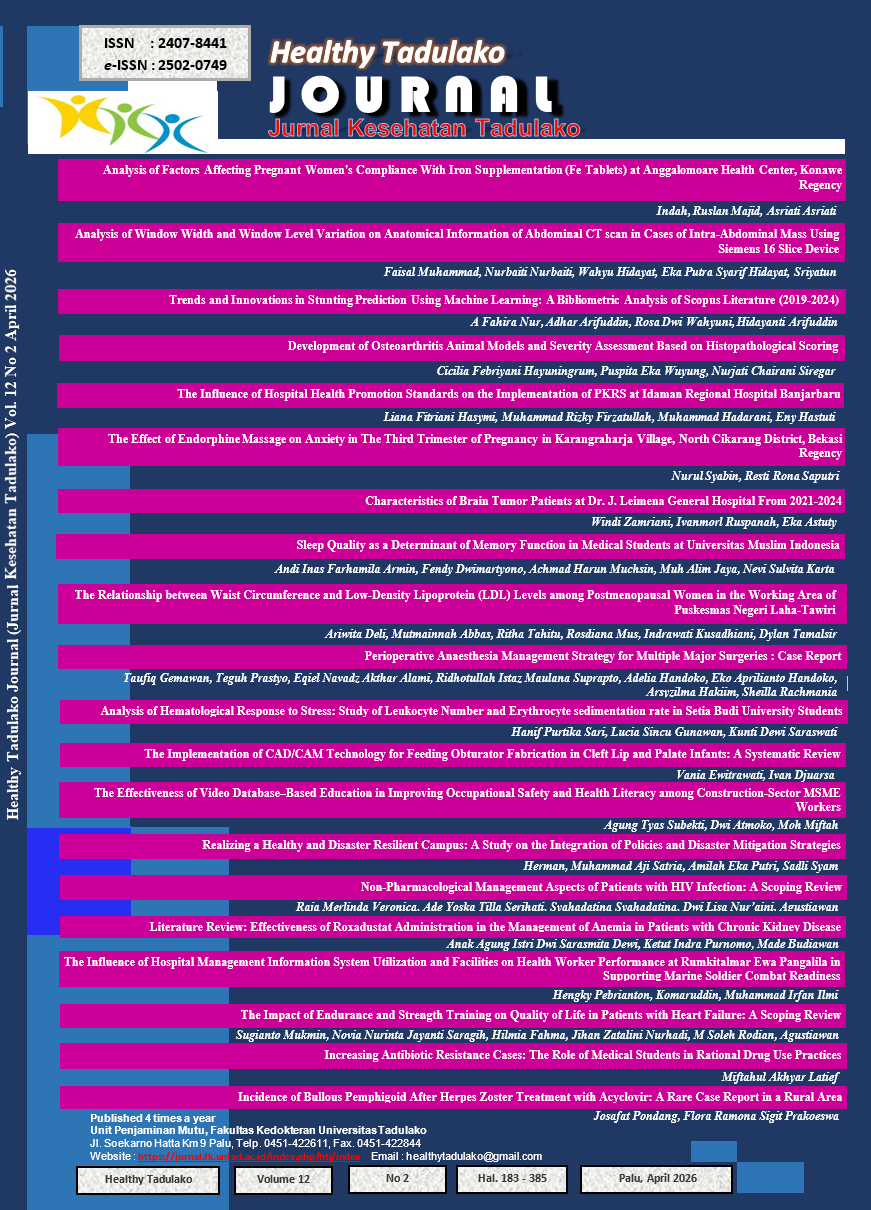
Increasing Antibiotic Resistance Cases: The Role of Medical Students in Rational Drug Use Practices
DOI:
https://doi.org/10.22487/fv285944Keywords:
Antibiotic Resistance, Medical Students, Rational Use, Health Education, Antimicrobial StewardshipAbstract
Background: Antibiotic resistance is one of the greatest global health threats of the 21st century, largely driven by irrational antibiotic use in communities and health-care settings. Objective: This study aimed to analyze the role of medical students in promoting rational antibiotic use and contributing to antibiotic resistance prevention efforts. Methods: This study used a descriptive qualitative approach with purposive sampling involving 15 medical students. Data were collected through in-depth interviews and participant observation, then analyzed using thematic analysis to identify key themes related to students’ knowledge, attitudes, and practices regarding antibiotic use. Results: Most students demonstrated good conceptual understanding of antibiotic resistance, including its biological mechanisms and public health consequences. However, a gap remained between theoretical knowledge and clinical application. Student behavior was influenced by internal factors, such as knowledge, motivation, and professional ethics, as well as external factors, including clinical supervisors, academic culture, patient expectations, and institutional policies. Medical students also acted as agents of change through public education, community outreach, digital campaigns, and service-based learning activities. Conclusion: Medical education should strengthen integration between theory, clinical practice, antimicrobial stewardship, and community service to develop future physicians who are competent, ethical, and actively involved in preventing antibiotic resistance more effectively.
Downloads
Downloads
Published
Issue
Section
License
Copyright (c) 2026 Miftahul Akhyar Latief

This work is licensed under a Creative Commons Attribution-ShareAlike 4.0 International License.